Single Points of Failure: The Supplier Concentration Problem Quietly Threatening UK Import Operations

Photo: supply chain risk management business continuity planning Asia, via images.rawpixel.com
There is a particular kind of commercial confidence that comes from a well-established supplier relationship. The factory visits have been done, the samples have passed inspection, the payment terms are understood, and the lead times are reliable. For UK importers who have spent years cultivating Asian sourcing partnerships, this familiarity is genuinely valuable. It represents accumulated knowledge, reduced transaction costs, and a degree of operational predictability that is difficult to replicate quickly.
It also, in many cases, represents a significant and underappreciated risk.
The concentration of UK import operations around a small number of trusted suppliers—often located within the same province, industrial cluster, or even the same business park—creates a structural vulnerability that does not appear on most risk registers. Until something goes wrong. And in recent years, the frequency and variety of things going wrong in Asian supply chains has provided ample evidence that this vulnerability is not theoretical.
The Anatomy of Supplier Concentration Risk
Supplier concentration risk, in the context of UK importing from Asia, takes several forms. The most obvious is geographic: a business that sources 70 or 80 per cent of its product from factories within a single Chinese province is exposed to any disruption that affects that province specifically—whether that is an extreme weather event, a regulatory intervention, an industrial accident, or a localised public health measure.
Less obvious, but equally consequential, is the concentration of production capability. Many UK importers work with suppliers who have developed proprietary processes, tooling, or formulations specific to that business relationship. If that supplier exits the market, reduces capacity, or is acquired by a competitor, the importer faces not merely a logistics problem but a production capability gap that cannot be filled quickly.
Political and trade risk adds a further dimension. The bilateral relationship between the United Kingdom and China has evolved considerably in recent years, and the regulatory environment governing goods of Chinese origin—particularly in categories subject to anti-dumping measures, sanctions adjacency, or enhanced customs scrutiny—has become more complex. An importer whose entire supply base sits within a single jurisdiction has limited flexibility to respond if that jurisdiction becomes a source of compliance friction.
Why Standard Procurement Reviews Miss the Problem
Despite its significance, supplier concentration risk rarely surfaces in routine procurement reviews. This is partly a function of how those reviews are structured. They typically assess individual supplier performance—quality metrics, on-time delivery, pricing competitiveness—rather than the systemic exposure created by the portfolio of suppliers as a whole.
A supplier who consistently delivers on time, at specification, and within agreed cost parameters will score well in any standard assessment. What that assessment does not capture is the degree to which the importing business has become dependent on that single relationship, and what the consequence of its sudden unavailability would be.
The gap between supplier-level performance and portfolio-level resilience is where concentration risk lives. Identifying it requires a different analytical lens—one that asks not merely how well each supplier is performing, but what would happen if any one of them ceased to be available tomorrow.
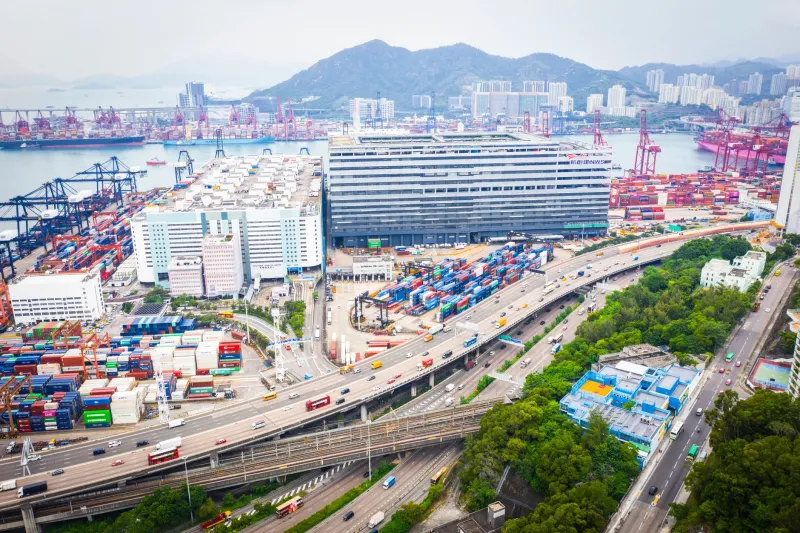
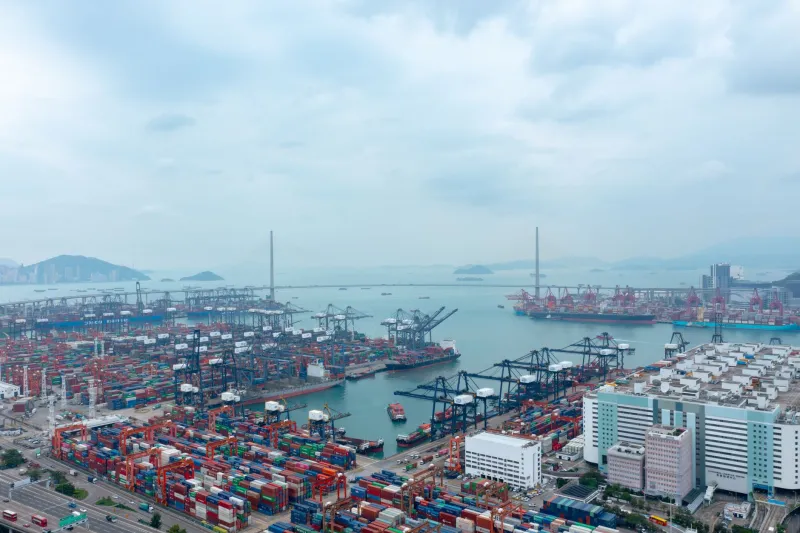
The Hong Kong Contingency: More Than a Transit Point
For UK importers seeking to address supplier concentration, Hong Kong offers a set of capabilities that are frequently underutilised. Its established position as a trading and logistics hub means that it hosts a dense ecosystem of manufacturers, trading companies, freight forwarders, and inspection agents with connections across mainland China, Southeast Asia, and beyond.
For an importer currently sourcing exclusively from Guangdong-based factories, Hong Kong provides practical access to a broader supplier network—including producers in Vietnam, Cambodia, Bangladesh, Malaysia, and other manufacturing centres—without requiring the importer to establish direct relationships in each of those markets. Trading companies and sourcing agents based in Hong Kong have historically served precisely this intermediary function, and continue to do so with considerable sophistication.
Maintaining a vetted set of alternative suppliers through a Hong Kong-based sourcing relationship is not merely a contingency measure. It is a negotiating asset. A supplier who understands that their UK client has credible alternatives will price and perform differently from one who believes they hold a captive relationship. The commercial benefit of diversification is not limited to the moment of disruption—it is present in every negotiation conducted from a position of genuine choice.
Building a Credible Plan B: Practical Considerations
Establishing alternative supplier relationships requires investment that many UK importers are reluctant to make when existing arrangements appear to be functioning well. The objections are familiar: the time required to qualify new suppliers, the cost of initial sampling and tooling, the disruption to established workflows. These are legitimate concerns, but they need to be weighed against the cost of being caught without options when a primary supplier fails.
A practical approach involves identifying the two or three product categories that represent the highest concentration risk—typically those with the longest lead times, the highest unit value, or the greatest production complexity—and prioritising diversification in those categories first. For each, the objective is not to immediately shift volume but to complete the qualification process for at least one alternative supplier, such that a pivot can be executed within a commercially viable timeframe if required.
Hong Kong-based sourcing intermediaries can compress the timeline for this process considerably. Their existing relationships with manufacturers across multiple Asian jurisdictions, combined with their familiarity with UK compliance requirements, mean that the work of identifying, vetting, and sampling alternative suppliers can be conducted more efficiently than if the UK importer were to approach the task directly.
Factory Closures, Political Risk, and the Cost of Unpreparedness
The events of the past five years have provided a series of stress tests for UK import operations that were, in many cases, instructive in their severity. Factory closures during periods of regulatory enforcement in China, shipping disruptions arising from geopolitical tensions in the Red Sea corridor, and the broader fragility exposed by pandemic-related production stoppages have collectively demonstrated that supply chain disruptions are not exceptional events to be managed reactively. They are recurrent features of the operating environment that require structural preparation.
For UK importers who experienced these disruptions without alternative supplier relationships in place, the consequences were stark: product shortages, missed sales windows, emergency freight costs, and in some cases, permanent loss of market position to competitors who were better prepared.
The lesson is not that every supply chain can be made disruption-proof. It cannot. The lesson is that the cost of maintaining a credible contingency—vetted alternative suppliers, a regional diversification hub, and the operational capacity to switch—is substantially lower than the cost of being without one when circumstances demand it.
Resilience as a Commercial Advantage
There is a tendency to frame supply chain resilience as a defensive investment—something a business does to protect against downside risk. This framing is incomplete. The UK importers who navigated recent disruptions most effectively did not merely avoid losses. They captured market share from competitors who could not fulfil demand, maintained customer relationships that competitors forfeited, and entered the subsequent trading period with strengthened supplier leverage.
Supplier diversification, anchored by a Hong Kong contingency strategy, is not simply a risk management exercise. It is a structural competitive advantage for UK businesses that take it seriously. The question is not whether the investment is warranted. The question is whether it is made before or after the moment it becomes urgently necessary.