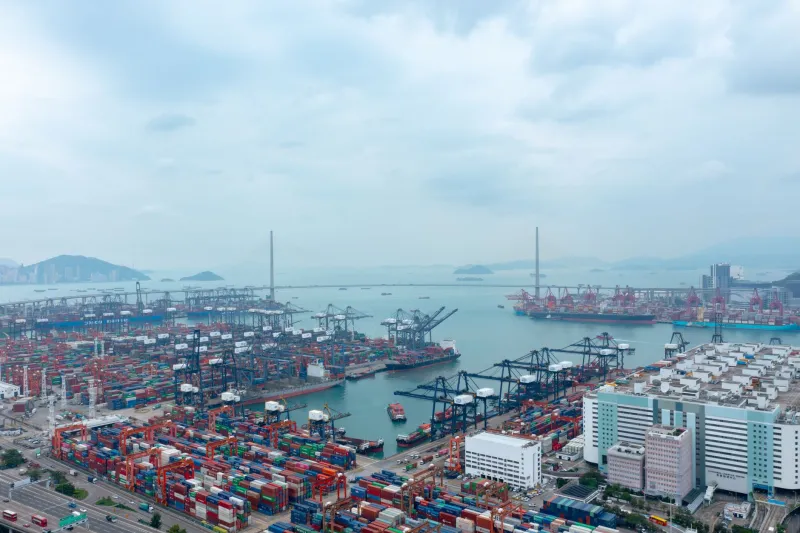
Duty Drift: How Customs Misclassification and Documentation Gaps Are Quietly Inflating Your Hong Kong Import Costs

There is a particular kind of financial damage that is difficult to detect precisely because it arrives gradually. Unlike a failed shipment or a rejected consignment, misclassification errors and documentation gaps do not announce themselves. They embed themselves within routine import cycles, compounding quietly across months or years until the cumulative cost becomes impossible to ignore — if it is ever noticed at all.
For UK businesses importing through Hong Kong, this problem has grown considerably more complex since 2021. The combination of post-Brexit tariff schedules, evolving rules of origin requirements, and the administrative demands of the UK Global Tariff has created fertile conditions for duty miscalculation. When those errors intersect with the nuances of Hong Kong's own customs framework, the results can be financially significant and surprisingly difficult to unwind.
The Commodity Code Problem
At the root of most import duty errors is the Harmonised System commodity code — the internationally standardised numerical classification that determines which duty rate applies to a given product. In principle, the system is logical. In practice, it is extraordinarily granular, and the consequences of selecting the wrong code can be substantial.
Consider a UK importer sourcing electronic components through a Hong Kong distributor. The goods are correctly manufactured, correctly invoiced, and correctly transported. Yet if the commodity code applied at the point of UK customs entry does not precisely reflect the technical specification of those components — perhaps because a previous classification was carried forward without review, or because a product specification changed without triggering a documentation update — the duty rate applied may be entirely incorrect.
This is not a rare scenario. In high-volume supply chains, commodity codes are frequently assigned once and then replicated across subsequent shipments without reassessment. When product lines evolve, when suppliers change their manufacturing processes, or when UK tariff schedules are updated, those carried-forward codes become liabilities.
The financial exposure works in both directions. Businesses may be overpaying duty on goods that qualify for a lower rate, or — more dangerously — underpaying on goods that attract a higher one. The former represents a recoverable loss; the latter, a compliance risk that can attract penalties and retrospective assessments from HMRC.
Post-Brexit Recalculation Errors
Prior to the UK's departure from the European Union, British importers operated under EU customs arrangements that included established classification precedents, binding tariff rulings, and a well-developed body of case law to guide ambiguous classifications. That infrastructure no longer applies directly to UK imports.
The UK Global Tariff, introduced in January 2021, broadly mirrors the EU Combined Nomenclature but diverges in meaningful ways. Duty rates differ across specific product categories, and the UK's own tariff suspension and preference frameworks have developed independently since then. For importers who established their Hong Kong supply chains under EU-era assumptions and have not conducted a thorough post-Brexit audit, there is a genuine risk that duty calculations remain anchored to outdated parameters.
Hong Kong itself operates as a free port with no import duties on most goods. This can create a false sense of administrative simplicity. Because goods transiting Hong Kong rarely attract duty at that stage, documentation standards can be less rigorously scrutinised by local handlers than they would be in jurisdictions where customs duties apply at the point of entry. By the time goods reach UK ports, any classification ambiguities or documentation gaps have already been baked into the paperwork.
Incomplete Documentation: A Systemic Risk
Beyond commodity codes, the completeness and accuracy of customs documentation itself represents a significant compliance variable. For UK importers sourcing from Asian manufacturers via Hong Kong intermediaries, the documentation chain typically passes through multiple parties — the original manufacturer, a Hong Kong consolidator or distributor, a freight forwarder, and the UK customs broker. Each handoff is an opportunity for information to be lost, abbreviated, or incorrectly transcribed.
Certificates of origin are a particular concern. Under the UK's trade agreements and preference schemes, goods must meet specific rules of origin criteria to qualify for reduced or zero duty rates. Where Hong Kong acts as an intermediate distribution point, establishing the true origin of goods — and documenting it correctly — requires deliberate attention. A certificate that is missing, incorrectly completed, or issued by an unrecognised body may invalidate a preference claim entirely, resulting in the full Most Favoured Nation duty rate being applied.
Valuation discrepancies present a further risk. Customs value must reflect the transaction value of the goods, inclusive of specific adjustments. Where invoicing arrangements between UK buyers and Hong Kong suppliers involve discounts, rebates, or related-party pricing, there is scope for customs value to be understated — an issue that HMRC's risk assessment processes are increasingly attentive to.
Conducting a Practical Import Audit
For UK businesses concerned about whether their Hong Kong import data is accurately reflecting their duty obligations, a structured audit is the most effective starting point. The following framework provides a practical basis for that review.
Review commodity code assignments across the past 24 months. Identify any product lines where specifications have changed, suppliers have been switched, or classifications were assigned without a formal tariff ruling. Cross-reference current codes against the UK Trade Tariff to confirm rates and any applicable suspensions.
Verify rules of origin documentation for all preference claims. Confirm that certificates of origin on file are valid, correctly completed, and consistent with the claimed manufacturing origin of the goods. Where Hong Kong is the country of export but not the country of manufacture, ensure that intermediate processing does not affect origin status under the applicable rules.
Audit customs values for consistency with actual transaction terms. Review invoice arrangements with Hong Kong suppliers to confirm that customs values reflect the correct transaction value, including any adjustments required under UK valuation rules.
Identify overpaid duties eligible for recovery. HMRC's C285 procedure allows importers to claim repayment of overpaid customs duty for up to three years following the date of acceptance of the original customs entry. Where an audit identifies systematic overpayment, a structured recovery claim may represent a material financial opportunity.
Assess underpayment exposure and consider voluntary disclosure. Where the audit identifies potential underpayments, early voluntary disclosure to HMRC typically results in more favourable treatment than errors discovered through compliance checks. Taking proactive steps demonstrates good faith and can mitigate penalty exposure.
The Cost of Inaction
There is a tendency among busy procurement and logistics teams to treat customs compliance as a matter for the freight forwarder or broker to manage. In practice, responsibility for accurate classification and documentation ultimately rests with the importer of record — the UK business named on the customs entry. Delegating that responsibility without oversight does not transfer the liability.
For businesses with established Hong Kong supply chains, the investment required to conduct a thorough import audit is modest relative to the financial exposure it can uncover. In an environment where supply chain margins are under sustained pressure, recovering hidden duty costs is one of the more straightforward levers available.
The goods arriving at your UK warehouse may be exactly what was ordered, priced, and shipped. The question is whether the duty paid on them accurately reflects what was owed — and whether you have looked closely enough to know for certain.