Wrong Hub, Wrong Rules: How Misrouted Asian Shipments Are Draining UK Import Budgets
For many UK procurement managers, the phrase "rules of origin" sits somewhere between dry regulatory language and a compliance formality that someone else handles. That assumption is proving costly. Since the UK's departure from the European Union, trade agreements with Asian partners have introduced a more complex — and, for the unprepared, more expensive — set of conditions governing how goods qualify for preferential tariff treatment. The consequences of getting this wrong are not theoretical. Businesses are paying thousands of pounds in unnecessary duties every year, often without realising the problem exists.
The root cause is frequently not negligence but a structural misunderstanding of how origin is assigned when goods travel through multiple Asian jurisdictions before reaching British shores.
What Rules of Origin Actually Mean in Practice
At its most fundamental level, a rule of origin determines the economic nationality of a product. It answers the question: where was this good meaningfully made? Under most trade agreements, including those the UK has negotiated or rolled over since Brexit, preferential tariff rates — sometimes zero — are only available when goods can demonstrate they originate in the qualifying country. Simply passing through a country, or even being repackaged there, does not ordinarily confer origin.
The specific thresholds vary by agreement and by product category. Some goods must undergo a defined change in tariff classification. Others must satisfy a regional value content test, whereby a specified percentage of the product's value must derive from within the qualifying territory. A third category demands that certain manufacturing processes be performed locally. When UK importers route shipments through a hub that cannot satisfy these tests — even if the hub is geographically convenient or commercially familiar — the preferential rate is lost.
The practical implication is that a UK business importing electronics assembled in one country, transshipped through a second, and documented through a third may find that none of those jurisdictions can provide the certificate of origin that HMRC requires to apply the preferential duty rate. The default most-favoured-nation tariff then applies, and the cost differential can be substantial.
The Transshipment Trap
The growth of complex regional supply chains across Southeast and East Asia has made transshipment increasingly common. Goods are manufactured in one country, consolidated in another, and shipped onward from a third. This model is efficient from a logistics standpoint, but it creates significant compliance risk if the transshipment point is treated as the de facto origin without proper verification.
Several major Southeast Asian manufacturing hubs have expanded rapidly in recent years, attracting production that relocated from China in response to earlier rounds of US-China trade tensions. The resulting supply chains are sophisticated but layered. Components may originate in one country, undergo partial processing in another, and reach final assembly in a third. For UK importers, the critical question is whether the final assembly location can satisfy the origin criteria in the relevant UK trade agreement — and whether the documentation trail is sufficient to demonstrate this to HMRC.
Where documentation is inadequate or where the assembly process falls short of the required threshold, importers face retrospective duty assessments, penalties, and the administrative burden of resolving disputes with customs authorities. These costs rarely appear in initial landed cost calculations, which is precisely why they tend to surface as unwelcome surprises.
Why Hong Kong Occupies a Distinct Position
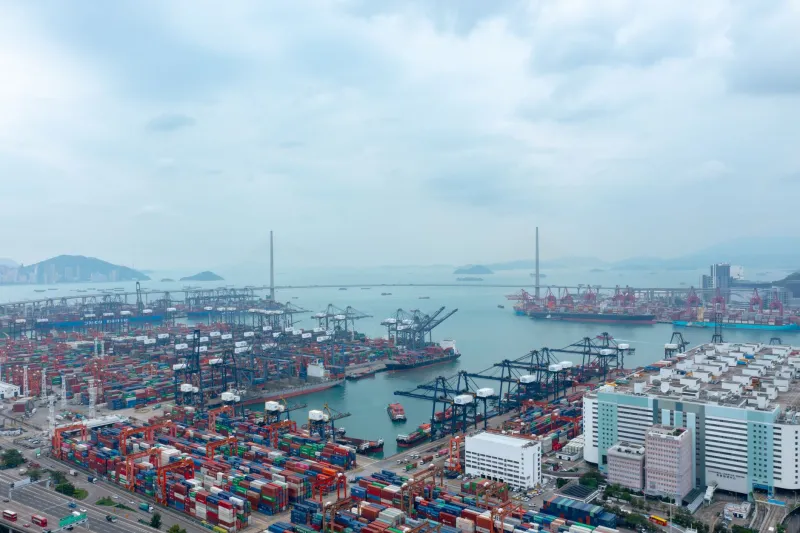
Hong Kong's role in Asian trade compliance is frequently mischaracterised. It is sometimes dismissed as merely a financial centre or a legacy entrepôt with diminishing relevance to modern supply chains. That view overlooks a more nuanced reality. As a separate customs territory with its own trade documentation infrastructure and a long-established framework for certifying origin, Hong Kong provides a level of regulatory clarity that is genuinely useful to UK importers navigating complex sourcing arrangements.
Goods that are substantively processed in Hong Kong — where transformation meets the relevant change-of-tariff-heading or value-added threshold — can legitimately carry Hong Kong origin. For certain product categories, this matters considerably when it comes to how the goods are classified and assessed upon arrival in the United Kingdom. Beyond origin certification, Hong Kong's customs administration maintains a reputation for procedural rigour and documentation reliability that supports the kind of audit trail HMRC expects.
For UK businesses working with manufacturers across southern China, Taiwan, or elsewhere in the region, Hong Kong also serves as a consolidation and quality-verification point. Engaging a distribution partner based in Hong Kong to manage the final stages of the supply chain — including origin verification, documentation preparation, and pre-shipment compliance checks — adds a layer of assurance that purely transactional logistics arrangements typically cannot provide.
Conducting a Tariff Exposure Audit
The first practical step for any UK importer concerned about origin compliance is to conduct a structured review of their current supply chain against the rules of origin schedules in the UK's relevant trade agreements. This means identifying, for each product line, the specific origin criteria that apply and then tracing the actual manufacturing and transshipment journey against those criteria.
This exercise frequently surfaces one of three scenarios. In the first, goods genuinely satisfy the origin requirements but the documentation is insufficient to prove it — a relatively straightforward fix. In the second, goods are being routed through a hub that adds cost and delay without conferring any compliant origin status — a structural inefficiency that can be addressed by reconfiguring the supply chain. In the third, and most commercially significant scenario, goods do not in fact meet the origin threshold at all, meaning the importer has either been overpaying duties unnecessarily or, more seriously, has been claiming preferential rates without proper entitlement.
Each scenario calls for a different response, but all three benefit from the involvement of a logistics and distribution partner with genuine expertise in Asian trade compliance rather than one that treats documentation as an administrative afterthought.
Building Compliance Into Sourcing Strategy
The broader lesson for UK procurement teams is that origin compliance should not be treated as a post-shipment concern. It needs to be embedded into sourcing decisions from the outset. When evaluating new suppliers or manufacturing partners in Asia, the ability to satisfy UK rules of origin requirements should carry the same weight as unit pricing, lead times, and quality standards.
This is particularly relevant as UK businesses diversify their Asian sourcing base in response to geopolitical pressures and supply chain resilience concerns. Moving production to a new country may reduce exposure to one set of risks while inadvertently creating new tariff complications if origin compliance is not assessed in advance.
Working with a Hong Kong-based distribution partner that understands both the regional manufacturing landscape and the specific requirements of UK trade agreements provides a practical mechanism for managing this complexity. The value is not simply in logistics execution but in the compliance intelligence that informs sourcing strategy before goods ever leave the factory floor.
For UK importers, the cost of getting origin wrong is measurable and avoidable. The businesses that are managing their Asian supply chains most effectively are those that have stopped treating rules of origin as a technicality and started treating them as a strategic variable.