Beyond the Mainland: Why Savvy UK Importers Are Rediscovering Hong Kong's Strategic Value
A Quiet Recalibration in UK Supply Chain Thinking
For much of the past two decades, the prevailing logic among UK importers was straightforward: go where the factories are. That meant Shanghai, Shenzhen, or Guangzhou — the industrial heartlands of China's manufacturing boom. Hong Kong, by contrast, was often treated as a legacy arrangement, a holdover from an earlier era of British commercial ties to the region.
That perception is changing, and changing quickly.
Across sectors ranging from consumer electronics to premium textiles, UK businesses are quietly repositioning their supply chain anchors. Rather than managing procurement directly through mainland offices or relying on intermediaries with variable accountability, a growing number of importers are routing their Asia-Pacific operations through Hong Kong — and reporting measurable improvements in cost control, compliance visibility, and lead-time reliability as a result.
This is not nostalgia. It is strategy.
The Regulatory Architecture That Mainland China Cannot Replicate
One of Hong Kong's most underappreciated competitive assets is its legal and regulatory environment. Operating under a common law framework derived from British jurisprudence, Hong Kong offers UK businesses a contractual landscape that feels familiar — and, crucially, enforceable.
When a Manchester-based homeware distributor entered a dispute with a supplier over a delayed shipment and substandard finishing in 2023, the resolution process through Hong Kong's International Arbitration Centre took eleven weeks. A comparable case routed through mainland Chinese commercial courts had, by the same firm's own account, taken the better part of eighteen months two years prior — with a less satisfactory outcome.
Beyond dispute resolution, Hong Kong maintains its own customs territory, separate from mainland China's. This distinction carries real weight for UK importers navigating post-Brexit tariff schedules and Rules of Origin requirements. Goods processed and documented through Hong Kong can, in many categories, attract different tariff treatment than equivalent goods shipped directly from the mainland — a nuance that compliance-conscious procurement teams are increasingly factoring into their landed cost calculations.
English as a Operational Language, Not a Courtesy
It may seem a minor point, but language infrastructure has a compounding effect on supply chain efficiency. In Hong Kong, English is not merely tolerated in business settings — it is embedded in legal documentation, government filings, shipping manifests, and financial instruments. For UK procurement managers coordinating across multiple time zones, the absence of translation friction reduces both error rates and response times.
A Bristol-based cycling accessories brand that shifted its sourcing coordination to a Hong Kong-based logistics partner in early 2024 noted that purchase order discrepancies — previously running at around 12 per cent of shipments when managed through a Shenzhen intermediary — dropped to under 3 per cent within two quarters. The firm's operations director attributed a significant portion of that improvement to clearer written communication at the point of order confirmation.
This is not an isolated observation. Across the businesses Ingram HK works with, the reduction in administrative rework attributable to clearer documentation practices consistently ranks among the top three efficiency gains cited after a transition to Hong Kong-anchored supply chain management.
The Southeast Asian Pivot and Hong Kong's Geographic Logic
The broader geography of Asian manufacturing is itself in transition. Vietnam, Cambodia, Bangladesh, and Indonesia have all expanded their export manufacturing capacity substantially over the past five years, driven in part by brands seeking to diversify away from single-country dependency on China. For UK importers, this diversification is prudent — but it introduces new coordination complexity.
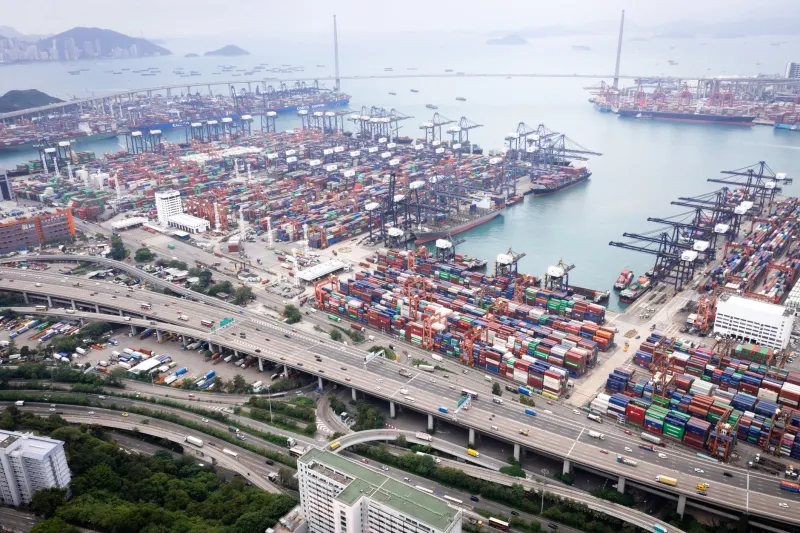
Hong Kong sits at a natural convergence point for these emerging corridors. Its port infrastructure handles transhipment volumes from across Southeast Asia with a consistency and processing speed that few regional alternatives can match. For a UK retailer sourcing garments from Ho Chi Minh City, components from Kuala Lumpur, and packaging from Guangdong simultaneously, consolidating those flows through a single Hong Kong-based logistics partner dramatically simplifies the final-mile coordination into the UK.
A London-based premium stationery brand undertook precisely this consolidation exercise in late 2023, having previously managed three separate freight relationships across two countries. Within six months of centralising through a Hong Kong distribution partner, the business reduced its average transit time to UK warehouses by nine days and cut its freight administration overhead by an estimated 30 per cent.
Compliance Visibility in an Era of Heightened Scrutiny
UK importers are operating under growing regulatory pressure to demonstrate supply chain transparency — from the Modern Slavery Act's reporting requirements to the increasing due diligence expectations embedded in forthcoming UK sustainability legislation. Sourcing accountability is no longer a box-ticking exercise; it carries reputational and, in some cases, legal weight.
Hong Kong's established intermediary culture — built around licensed trading houses, third-party inspection firms, and internationally accredited freight forwarders — provides a documentation trail that UK compliance teams find considerably easier to audit than equivalent mainland arrangements. Factory audit reports, social compliance certifications, and quality inspection records are more routinely produced, retained, and shared in formats that align with UK corporate governance expectations.
For procurement professionals who have spent time chasing certificates of origin or corrected commercial invoices from mainland suppliers, this structural difference is not trivial.
Rethinking the Cost Equation
The most common objection to Hong Kong-based supply chain management is cost. The assumption is that routing operations through one of the world's most expensive cities will inevitably inflate overheads. In practice, the picture is more nuanced.
Direct operational costs — office space, local staffing, agent commissions — are undeniably higher in Hong Kong than in second-tier mainland cities. However, when UK businesses conduct a full landed cost analysis that incorporates compliance rework, shipment error rates, dispute resolution time, and the administrative burden of managing fragmented logistics relationships, the differential frequently narrows or reverses.
One Yorkshire-based industrial components importer conducted precisely this analysis in 2024 after two years of escalating quality control issues with a direct mainland sourcing arrangement. Their conclusion: the all-in cost of managing supply chain exceptions and delays under the previous model exceeded the premium associated with their new Hong Kong-anchored structure by a margin of approximately 18 per cent annually.
A Foundation for Long-Term Supply Chain Resilience
The businesses deriving the most value from Hong Kong's position are not those treating it as a short-term workaround. They are those that have recognised it as a durable operational platform — one that offers regulatory familiarity, language compatibility, geographic flexibility, and compliance infrastructure in a single jurisdiction.
For UK importers reassessing their Asia-Pacific strategy in 2025, the question is no longer whether Hong Kong warrants consideration. It is whether the cost of not reconsidering it is one they can continue to absorb.