The Gateway Strategy: How UK Retailers Can Harness Hong Kong's Distribution Networks in 2025
The Gateway Strategy: How UK Retailers Can Harness Hong Kong's Distribution Networks in 2025
For decades, Hong Kong has occupied a singular position in global trade — not merely as a commercial city, but as the connective tissue between Asian manufacturing and Western consumption. In 2025, that role remains not only relevant but arguably more valuable than ever for UK retailers navigating a complex post-Brexit import landscape.
Whether you operate a regional wholesale business, manage procurement for a mid-sized retailer, or are scaling a product-based brand, understanding how to work with Hong Kong's distribution infrastructure could meaningfully alter your cost base, your lead times, and ultimately your margins.
This article sets out the practical framework for doing exactly that.
Why Hong Kong Still Matters for UK Sourcing
It would be easy to assume that the rise of direct-from-China platforms and the expansion of Southeast Asian manufacturing bases might have diminished Hong Kong's relevance. In practice, the opposite is true for businesses seeking reliability alongside cost efficiency.
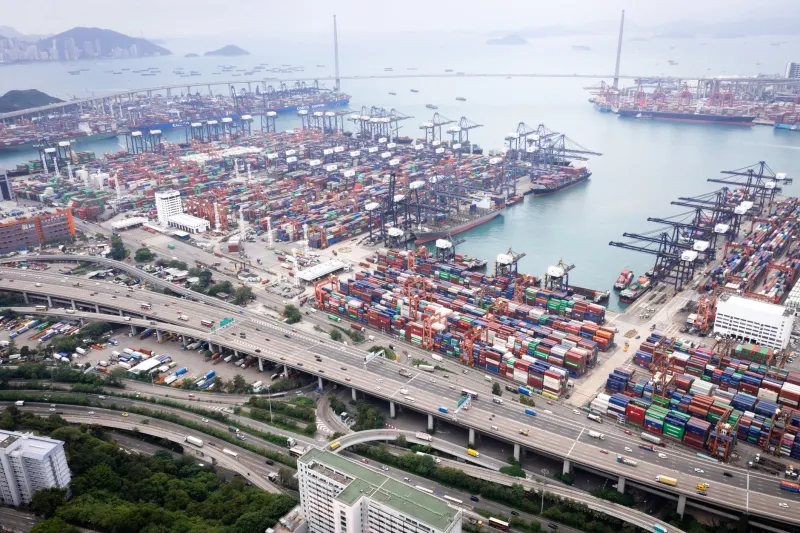
Hong Kong operates under a distinct legal and regulatory framework that offers UK importers significant advantages: a common law system with strong contract enforcement, a freely convertible currency, and a deeply experienced logistics sector that has handled international freight for generations. Its port infrastructure consistently ranks among the world's most efficient, and its proximity to Guangdong Province — the manufacturing heartland of southern China — makes it an ideal consolidation and onward-shipping point.
For UK businesses, this translates into a distribution partner that understands both Asian supplier dynamics and the expectations of Western commercial clients.
Understanding the Logistics Timeline
One of the most common misconceptions among UK businesses new to Asia-sourcing is underestimating lead times. Planning for realistic timelines is essential to avoiding stock shortfalls, particularly during peak retail seasons.
A typical sea freight shipment from Hong Kong to a UK port — most commonly Felixstowe or Southampton — takes between 28 and 35 days under standard routing. Air freight reduces this to approximately 5 to 7 days, though at a substantially higher cost per kilogram. For businesses with predictable seasonal demand, sea freight remains the economically rational choice, provided orders are placed with sufficient advance notice.
Working with a Hong Kong-based distribution partner adds value precisely at this stage. Regional specialists are able to consolidate shipments from multiple suppliers into a single container — a practice known as Less-than-Container Load (LCL) shipping — which allows smaller UK businesses to access freight economics that would otherwise be available only to large-volume importers. A boutique homeware retailer in the West Midlands, for instance, can ship alongside other non-competing product lines, splitting container costs and reducing per-unit freight charges significantly.
Navigating Customs in a Post-Brexit Environment
Since the UK's departure from the European Union, import procedures have undergone considerable revision. UK businesses importing from Hong Kong must now account for a distinct set of documentation requirements, duty classifications, and VAT obligations that differ from those that applied during the EU single market period.
Goods imported from Hong Kong into Great Britain are subject to UK Global Tariff rates, which vary by product category. Crucially, the tariff applied is based on the country of origin of the goods — not the country from which they are shipped. Products manufactured in mainland China and distributed through Hong Kong will attract the tariff rate applicable to Chinese-origin goods. UK importers should therefore request clear certificates of origin from suppliers and verify these against HMRC's trade tariff tool before committing to purchase agreements.
Customs Entry procedures now require a full import declaration for all commercial shipments, and delays at the border — while less frequent than in the immediate post-Brexit period — remain a risk for shipments with incomplete or inaccurate documentation. A distribution partner with established UK customs brokerage relationships can substantially reduce this exposure.
Duty deferment accounts, available through HMRC, allow businesses to consolidate monthly duty payments rather than paying per shipment — a useful cash flow tool for businesses importing regularly.
Cost Benchmarks and What to Expect
Cost transparency is frequently cited as a pain point for businesses new to Asia-sourcing. Without established benchmarks, it is difficult to assess whether a quoted price represents genuine value or whether margins are being eroded before goods even reach the UK.
As a general reference point, sea freight costs for a full 20-foot container (TEU) from Hong Kong to a major UK port currently range from approximately £1,200 to £2,000, depending on carrier, season, and market conditions. LCL rates are typically quoted per cubic metre, with costs ranging from £80 to £150 per CBM inclusive of origin handling charges.
These figures fluctuate — sometimes considerably — in response to global freight market dynamics. The disruptions of 2021 and 2022, during which container rates reached historic highs, remain instructive. Businesses that had established relationships with regional distribution partners were better positioned to secure capacity during those periods than those relying on spot-market bookings.
How Smaller UK Businesses Can Compete
One of the most persistent myths in international trade is that Asia-sourcing is the exclusive domain of large corporations with dedicated procurement departments. The reality, particularly when working through an established Hong Kong distribution partner, is considerably more accessible.
Consider a hypothetical independent UK retailer specialising in consumer electronics accessories. Operating with a modest annual purchasing budget, this business might previously have relied on European wholesalers at relatively high unit costs. By establishing a sourcing relationship through a Hong Kong-based distributor — one that consolidates orders, manages supplier quality checks, and arranges LCL shipping — the same retailer can access factory-gate pricing with manageable minimum order quantities, professional pre-shipment inspection, and reliable delivery scheduling.
The competitive advantage is not simply price. It is the combination of product range, supply reliability, and the ability to respond to market trends with shorter reorder cycles than domestic wholesalers typically allow.
Choosing the Right Regional Partner
The quality of a UK business's Asia-sourcing experience is, to a considerable degree, a function of the quality of its regional partnerships. An experienced Hong Kong-based distributor will offer more than freight forwarding. They will provide supplier vetting, product compliance guidance, pre-shipment inspection coordination, and ongoing market intelligence — services that are particularly valuable for businesses without in-house sourcing expertise.
When evaluating potential partners, UK businesses should enquire about their familiarity with UK product safety standards, their relationships with established freight carriers, and their experience handling the specific product categories relevant to your business. References from existing UK clients are a reasonable expectation.
At Ingram HK, our work is built on precisely this kind of sustained, detail-oriented partnership. We connect UK wholesale and retail clients to Asia's supply chain not as a transactional intermediary, but as an embedded logistics partner that understands the commercial pressures facing British businesses in today's trading environment.
Looking Ahead
2025 presents a genuinely constructive moment for UK retailers willing to invest in their sourcing infrastructure. Freight markets have stabilised relative to recent years, Hong Kong's logistics sector continues to operate with characteristic efficiency, and the regulatory landscape — while more complex than in pre-Brexit times — is now well understood by experienced practitioners.
The businesses that will benefit most are those that approach Asia-sourcing strategically rather than opportunistically: building relationships, planning around realistic timelines, and working with partners who know the terrain. Hong Kong, as a gateway, has not closed. For those who know how to use it, it remains very much open.