Stocking Smarter: How UK Brands Are Using Hong Kong as Their Asia-Pacific Inventory Base
The Shifting Logic of Inventory Management
For decades, the default model for UK businesses sourcing goods from Asia followed a straightforward pattern: manufacture in mainland China or Southeast Asia, consolidate shipments, and dispatch everything westward to British or European distribution centres. It was a linear approach that made reasonable sense when freight costs were predictable, consumer expectations were modest, and global supply chains ran without significant disruption.
That model is under considerable strain. Rising ocean freight rates, port congestion, extended transit times, and the growing expectation of rapid fulfilment have collectively exposed the fragility of purely UK-centric inventory strategies. In response, a cohort of forward-thinking British businesses — spanning consumer goods, industrial components, fashion, and electronics — is adopting a fundamentally different approach: positioning Hong Kong not merely as a procurement gateway, but as a functioning regional inventory base.
The implications of this shift extend well beyond warehousing logistics. It represents a structural reconsideration of where inventory should live, and when.
Why Hong Kong Remains a Compelling Warehousing Location
Hong Kong's credentials as a logistics hub are not new, but they are frequently underestimated by UK businesses that have focused exclusively on cost-per-unit when evaluating Asian operations. Several structural advantages make it particularly well-suited to regional inventory positioning.
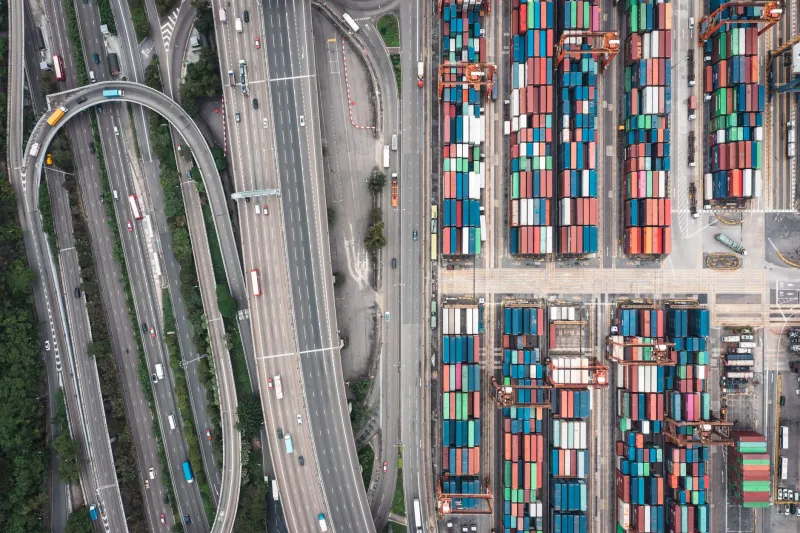
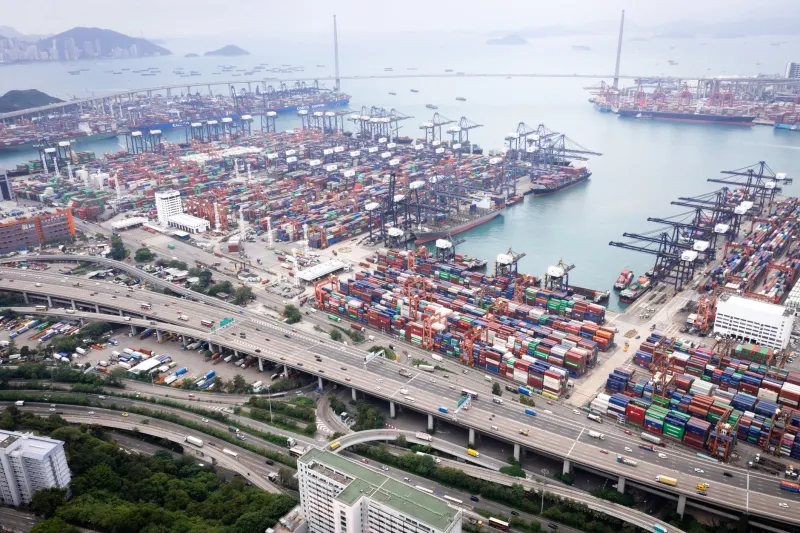
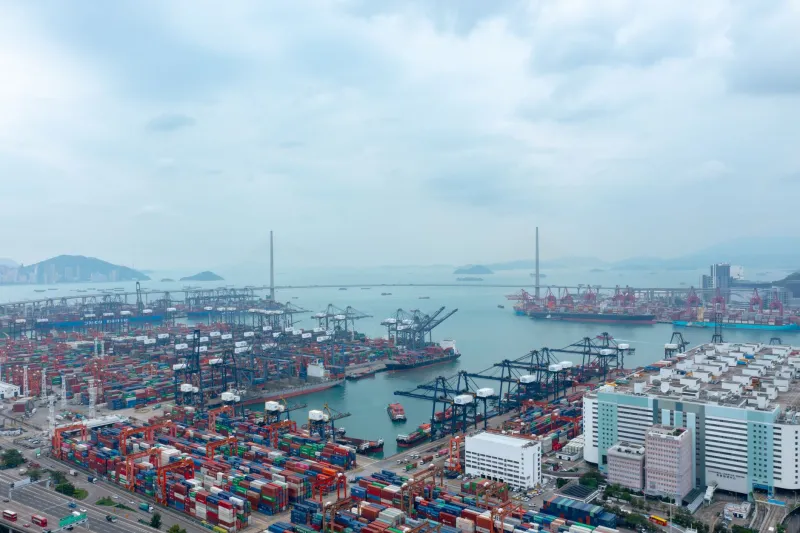
The territory operates one of the world's busiest container ports, with direct shipping connections to over 470 destinations globally. Its international airport consistently ranks among the top cargo hubs worldwide by freight volume. Crucially, Hong Kong maintains its own customs territory, operating independently from mainland China's import and export regime. This means goods can be stored, inspected, repackaged, and redistributed without triggering Chinese import duties — a regulatory distinction that carries significant financial consequences for companies managing complex multi-market distribution.
The legal framework is equally relevant. Hong Kong's common law system, inherited from British administration and preserved under the Basic Law, provides UK businesses with a familiar contractual and dispute-resolution environment. Intellectual property protections are robust. Warehousing and logistics service providers operate under internationally recognised standards. For a British company evaluating operational risk, these factors collectively reduce the friction typically associated with establishing inventory infrastructure in an unfamiliar jurisdiction.
Low or zero tariffs on most imported goods, combined with the absence of VAT on goods in transit or re-export, further enhance Hong Kong's attractiveness as a staging point for inventory destined for multiple markets.
Real-World Applications: How UK Companies Are Structuring This
Consider the position of a mid-sized UK consumer electronics brand supplying both British retailers and a growing base of distributors across Japan, South Korea, and Australia. Previously, all finished goods were shipped from a Shenzhen factory to a warehouse in the West Midlands, from which international orders were fulfilled. Transit times to Asia-Pacific customers regularly exceeded five weeks, and the cost of shipping individual pallets intercontinentally made smaller, more frequent orders economically unviable.
By establishing a bonded warehousing arrangement in Hong Kong — working through a regional distribution partner — the company now holds a proportion of its seasonal inventory in-territory. Orders destined for Asia-Pacific markets are fulfilled from Hong Kong within days rather than weeks. The UK warehouse continues to serve European demand. Manufacturing runs are split at source, reducing the volume of goods travelling unnecessary distances.
A comparable pattern has emerged in the premium apparel sector. One British fashion label with wholesale accounts across Singapore, Hong Kong, and mainland China previously managed all stock from a single UK facility. Seasonal collections arriving late due to extended transit times created markdown pressure and strained relationships with regional stockists. Repositioning a portion of forward stock to a Hong Kong logistics provider resolved the timing problem and, perhaps unexpectedly, reduced total freight expenditure — because consolidating outbound Asia-Pacific shipments from a single regional hub proved more efficient than dispatching individual consignments from the UK.
Evaluating Whether Regional Warehousing Makes Financial Sense
The appeal of this strategy is evident, but it is not universally appropriate. UK businesses considering Hong Kong as a regional inventory base should undertake a structured financial evaluation before committing to additional operational infrastructure.
The first question is volume. Regional warehousing in Hong Kong introduces fixed costs — storage fees, handling charges, local compliance requirements, and management overhead — that only generate a net benefit above a certain throughput threshold. Companies moving fewer than a few hundred pallets annually to Asia-Pacific customers may find the economics do not support a dedicated regional stock position.
The second consideration is demand predictability. Hong Kong warehousing works most effectively when businesses have reasonable visibility over regional order patterns. If Asia-Pacific demand is highly seasonal or volatile, carrying inventory in-territory creates write-down risk. Conversely, where demand is relatively consistent, regional stock can significantly reduce emergency airfreight spend — a cost that often fails to appear in initial financial models but erodes margin substantially.
Third, UK businesses should assess their existing supply chain relationships. Companies already working with freight forwarders or sourcing agents with Hong Kong operations may be able to access warehousing capacity through an extension of existing commercial arrangements, reducing the complexity of establishing new provider relationships from scratch.
Finally, currency exposure warrants attention. Operating a regional inventory position introduces Hong Kong dollar-denominated costs. For most UK businesses, this is a manageable consideration rather than a prohibitive one — the Hong Kong dollar's peg to the US dollar provides a degree of predictability — but it should be factored into financial modelling.
Practical First Steps for UK Businesses
For UK companies at the early stages of evaluating this approach, a phased entry is generally the most prudent path. Rather than committing immediately to a long-term warehousing contract, many businesses begin by testing the model with a single product category or a defined subset of Asia-Pacific customers. This generates real operational data — actual transit times, handling costs, order fulfilment rates — that can inform a more confident decision about broader adoption.
Engaging a Hong Kong-based logistics or distribution partner with experience serving UK clients is an important early step. The nuances of customs documentation, re-export procedures, and regional carrier relationships are not trivial, and local expertise reduces the risk of costly administrative errors during the initial phase.
It is also worth consulting with a trade compliance specialist familiar with both UK export regulations and Hong Kong's import and re-export framework. The regulatory environment is generally favourable, but specific product categories — particularly those subject to dual-use controls or sector-specific certifications — may require additional attention.
A Structural Opportunity, Not a Tactical Fix
The shift towards regional inventory positioning in Hong Kong reflects something more significant than a response to recent supply chain turbulence. It signals a broader maturation in how UK businesses conceptualise their operational geography. Rather than treating Asia purely as a manufacturing origin and the UK as the sole point of inventory control, progressive companies are beginning to think in terms of distributed stock positions that serve different markets from the most efficient location.
Hong Kong, with its infrastructure depth, regulatory clarity, and geographic centrality within the Asia-Pacific region, is exceptionally well placed to serve as the regional node in such a model. For UK businesses with meaningful Asia-Pacific revenue or ambitions, the question is less whether regional warehousing makes sense in principle, and more whether the specific economics of their operation support making the move now.