When Trade Rules Shift Overnight: Building a Hong Kong Contingency Into Your UK Import Strategy
For much of the past decade, UK importers operating in Asia operated on a straightforward assumption: identify your supplier, agree your terms, and manage the logistics. Tariff schedules were stable enough to plan around. Origin rules were predictable. The cost of goods could be modelled with reasonable confidence twelve months in advance.
That assumption is no longer safe.
In 2025, trade policy has become one of the most volatile variables in the import equation. New tariff classifications, evolving rules of origin under post-Brexit frameworks, and an increasingly fractious global trading environment mean that what was compliant and cost-effective last year may be neither this year. For UK businesses sourcing from Asia—particularly those reliant on a single country of origin—the exposure is considerable.
The question is not whether disruption will occur. It is whether your procurement structure is capable of absorbing it when it does.
The Single-Origin Risk That Most Buyers Underestimate
The appeal of single-origin sourcing is understandable. Consolidating your supplier relationships in one geography simplifies communication, reduces coordination overhead, and often yields better pricing through volume. For many UK buyers, that geography has been mainland China—an entirely rational choice given the depth of its manufacturing base.
The difficulty arises when the regulatory environment governing that origin shifts. A reclassification of goods under the UK Global Tariff, a change in the UK's preferential arrangements with a particular trading partner, or the introduction of new anti-dumping measures can alter landed costs almost instantaneously. Businesses with no alternative sourcing pathway find themselves with limited options: absorb the additional cost, renegotiate with suppliers who may have little room to move, or pass the increase to customers in a market that may not accept it.
None of these outcomes are desirable. All of them are avoidable with adequate preparation.
Why Hong Kong's Customs Status Matters More Than Ever
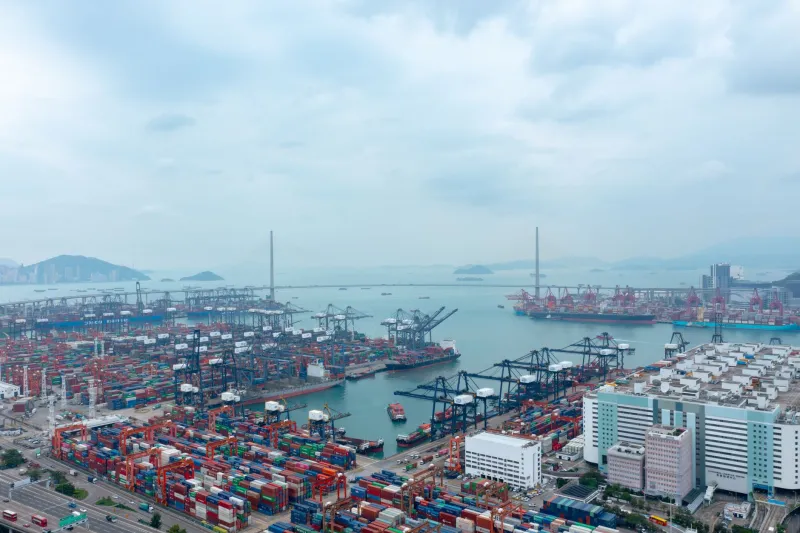
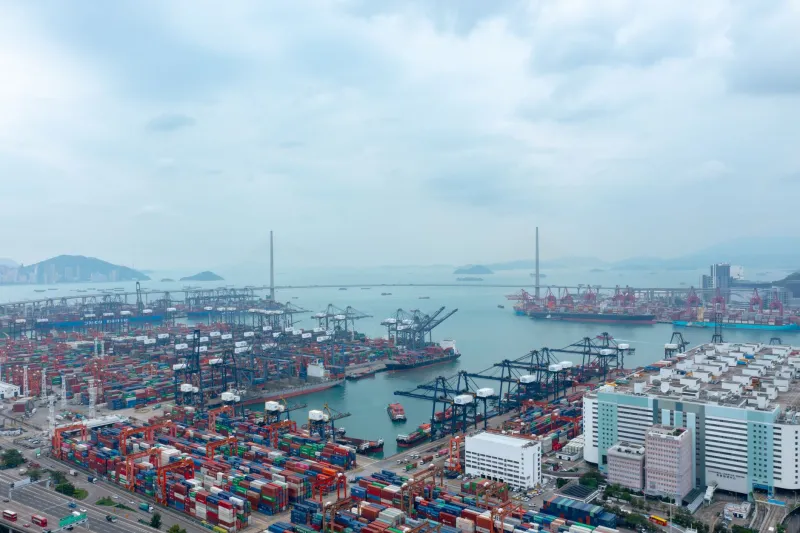
Hong Kong operates as a distinct customs territory, entirely separate from mainland China under the framework of 'one country, two systems'. This is not merely a legal technicality—it has substantive commercial implications for UK importers.
Goods processed, consolidated, or re-exported through Hong Kong carry Hong Kong origin documentation where applicable, governed by well-established and internationally recognised customs procedures. This distinction can be material when tariff schedules differentiate by country of origin, or when goods are subject to measures that apply specifically to mainland Chinese exports.
Furthermore, Hong Kong maintains its own network of free-trade and investment agreements, separate from those of the People's Republic. Its status as one of the world's most open trading environments—with a zero-tariff import regime on the vast majority of goods—means that using Hong Kong as a procurement or distribution hub introduces minimal friction whilst providing meaningful structural flexibility.
For UK importers navigating an unpredictable tariff landscape, that flexibility has a quantifiable value.
Diversification Is Not the Same as Duplication
A common misconception among procurement teams is that building a contingency sourcing route requires duplicating supplier relationships and carrying redundant stock. In practice, a well-structured Hong Kong-based arrangement need not be that cumbersome.
Working with a Hong Kong distributor or consolidator allows UK buyers to access a broader supplier network without managing each relationship directly. Goods from multiple Asian origins—whether manufactured in Vietnam, Malaysia, Taiwan, or indeed mainland China—can be consolidated, quality-checked, and prepared for UK export through a single operational point. The administrative complexity remains contained, whilst the origin diversification is genuine.
This model also lends itself to a tiered approach. A UK importer might maintain its primary supplier relationships as they are, whilst establishing a secondary procurement channel through Hong Kong for a defined proportion of its product range. In stable conditions, that secondary channel operates quietly in the background. When a regulatory event disrupts the primary route, it becomes the primary route—without the delays and renegotiations that would otherwise follow.
Compliance Architecture for a More Uncertain World
Beyond tariff exposure, UK importers face a growing compliance burden that extends well beyond customs duties. Extended Producer Responsibility schemes, product safety regulations, carbon border adjustment mechanisms under development in Westminster, and increasingly rigorous documentation requirements for country-of-origin declarations all add layers of complexity to the import process.
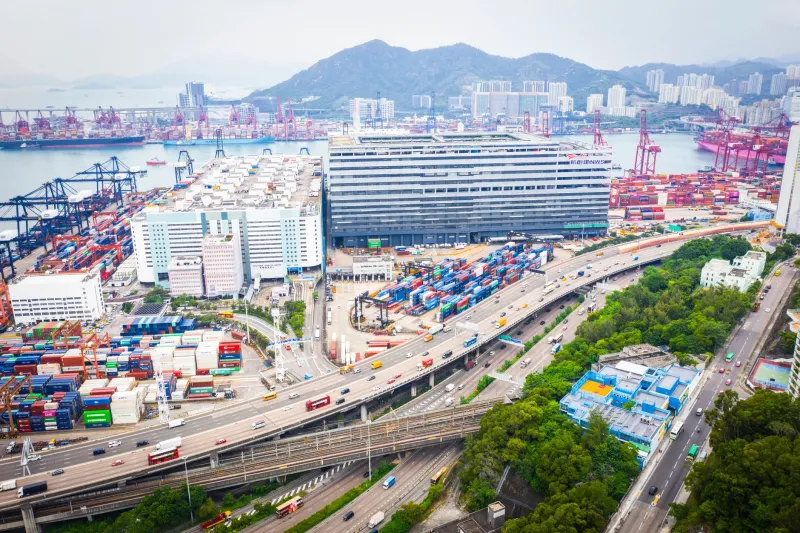
Hong Kong's well-developed logistics infrastructure and its community of trade compliance specialists make it a practical environment for managing these obligations. Documentation standards are high. Customs authorities are experienced in handling complex multi-origin consignments. And the professional services ecosystem—freight forwarders, customs brokers, trade lawyers—is mature and familiar with UK requirements.
For a UK procurement manager who needs confidence that their supply chain will survive regulatory scrutiny as well as commercial pressure, these are not trivial advantages.
Thinking Structurally, Not Reactively
The businesses that tend to suffer most from tariff shocks are those that address the problem after it has already materialised. By that point, the options are constrained. Supplier relationships cannot be established overnight. New logistics routes take time to validate. And the commercial damage—whether through margin compression, delayed shipments, or customer attrition—accumulates in the interim.
The businesses that manage these episodes most effectively are those that have already done the structural work. They have identified alternative sourcing routes. They have established relationships with Hong Kong-based distributors or consolidators who understand their product categories. They have mapped their exposure to origin-specific tariff risk and taken steps to diversify it.
This is not a counsel of pessimism. It is a straightforward observation about how resilient supply chains are built—not in response to disruption, but in anticipation of it.
A Practical Starting Point
For UK importers who have not yet considered Hong Kong as part of their contingency architecture, the starting point is an honest assessment of origin concentration. What proportion of your Asian sourcing is denominated in a single country of origin? What would a ten or fifteen per cent tariff increase on those goods do to your landed cost model? And do you have a credible alternative pathway that could be activated within a reasonable timeframe?
If the answers to those questions are uncomfortable, the conversation about a Hong Kong contingency is overdue.
The regulatory environment in 2025 will continue to evolve in ways that are difficult to predict with precision. What can be managed with precision is the structural resilience of your procurement strategy—and that is a choice that remains firmly within the control of every UK importer willing to make it.