From Panic to Precision: How Hong Kong's Consolidation Warehouses Are Rewriting the Economics of UK Retail Importing
The Hangover From Pandemic-Era Shipping Habits
During the supply chain disruptions of 2020 to 2022, air freight became a lifeline for UK retailers scrambling to keep shelves stocked. Borders closed, sea freight timelines became unreliable, and businesses paid whatever was necessary to move goods. The habit stuck. Long after container shipping normalised, many importers continued defaulting to air freight — not out of necessity, but out of operational inertia.
The consequences are now showing up in margin reviews across the retail sector. Air freight from Asia to the UK can cost anywhere from six to twelve times the equivalent sea freight rate, depending on the route, season, and cargo type. For high-volume, lower-margin product categories — consumer electronics accessories, homewares, seasonal apparel, promotional goods — those multiples are simply unsustainable as a routine logistics choice.
What has changed is that UK retailers are beginning to treat freight mode selection as a strategic decision rather than a reactive one. And at the centre of this shift is Hong Kong's well-established consolidation infrastructure.
What Consolidation Actually Means in Practice
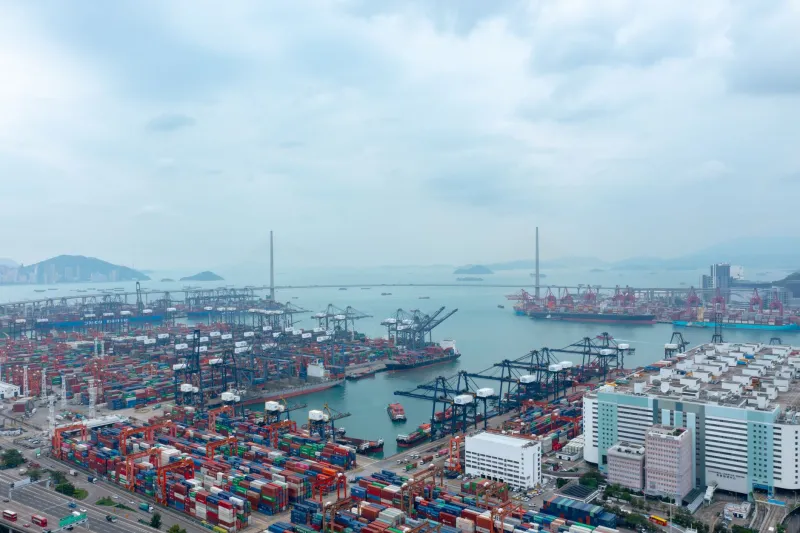
Consolidation warehousing — sometimes called groupage or LCL (less-than-container-load) aggregation — is not a new concept. What makes Hong Kong's version particularly effective is the density of its logistics ecosystem. The city sits at a natural crossroads for goods manufactured across southern China, Southeast Asia, and beyond. Consolidation facilities here can aggregate cargo from multiple suppliers across different production regions into a single outbound shipment bound for UK ports.
For a UK retailer sourcing across five or six Asian suppliers, this means those individual consignments do not need to travel separately. They arrive at the Hong Kong consolidation point, are checked, labelled, and combined into a single container or co-loaded shipment. The retailer pays for their share of the container, not the whole thing, and the goods move on a scheduled sea freight window rather than an ad hoc air booking.
The operational discipline this requires is actually a benefit in disguise. Retailers who commit to consolidation cycles must plan their procurement further in advance, which in turn reduces the reactive purchasing that so often triggers expensive air freight decisions in the first place.
The Hidden Savings That Don't Appear on the Freight Invoice
The direct freight cost comparison between air and sea is straightforward enough. But the broader savings from a well-managed consolidation strategy are less obvious and frequently underestimated.
First, there is the matter of customs documentation. Consolidated shipments moving through Hong Kong's bonded warehousing infrastructure arrive with cleaner, more consistent paperwork. When multiple suppliers' goods are consolidated under a single logistics provider with established HMRC compliance processes, the risk of documentation errors — and the delays and penalties they attract — is materially reduced.
Second, inventory management improves. Retailers who rely on frequent, small air shipments often do so because their stock visibility is poor and they are constantly firefighting shortfalls. Moving to a consolidation model forces better demand forecasting, which reduces both overstock and stockout events. The working capital benefit of this discipline can be significant.
Third, there is the carbon dimension. UK retailers with sustainability commitments are increasingly required to report on Scope 3 emissions, which include logistics. Sea freight produces a fraction of the carbon emissions of air freight per kilogram moved. Shifting volume to consolidated sea shipments is one of the more straightforward ways to improve a logistics carbon footprint without reducing commercial output.
How the Timing Works: Scheduled Windows vs. Reactive Bookings
One concern retailers frequently raise about consolidation is lead time. If your supplier in Guangdong completes production on a Tuesday and you need goods in a UK distribution centre within ten days, sea freight is not going to serve you. That much is true.
But the consolidation model does not ask retailers to abandon air freight entirely. It asks them to be honest about which shipments genuinely require air speed and which ones are being sent by air simply because no sea freight plan was in place.
In practice, retailers working with Hong Kong consolidation hubs typically operate on a rhythm. Bulk replenishment orders — those that can be forecast weeks in advance — move by sea on scheduled consolidation windows, often weekly or fortnightly departures to UK ports including Felixstowe and Southampton. Time-sensitive top-ups, new product launches, or genuine stockout emergencies continue to move by air, but they represent a much smaller proportion of total volume.
One mid-sized UK homewares retailer, for example, shifted approximately 70 per cent of its Asian sourcing volume from air to consolidated sea freight over an eighteen-month period. The remaining 30 per cent retained air freight for new season launches and promotional campaigns where timing was commercially critical. The blended freight cost per unit fell substantially, and the operational team reported that having a structured consolidation schedule actually reduced the number of emergency air bookings, because procurement planning improved as a direct consequence of committing to the model.
Hong Kong's Infrastructure Advantage
Not every Asian logistics hub offers the same conditions for consolidation. Hong Kong's particular advantages are worth understanding.
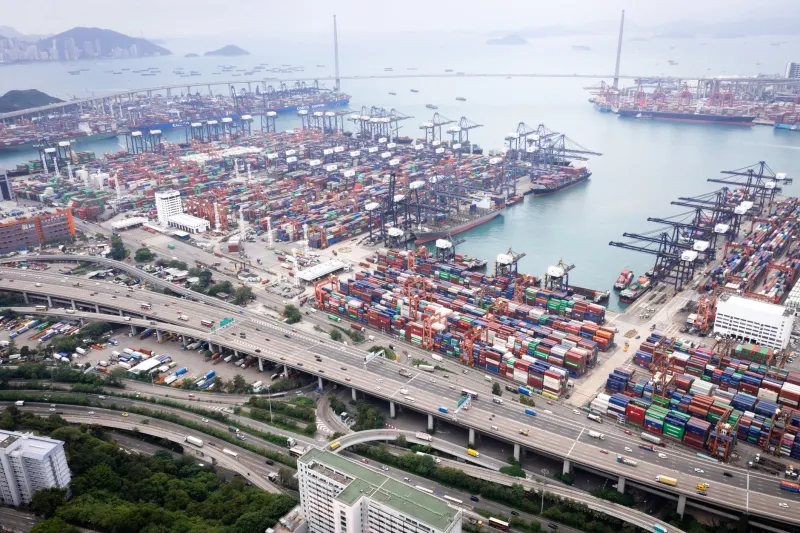
The port remains one of the most efficient in the world by throughput and customs processing speed. Its legal and commercial framework — operating under common law principles familiar to UK businesses — provides contractual clarity that some alternative hubs cannot match. Bonded warehouse facilities are sophisticated, temperature-controlled options are available for appropriate goods, and the city's position as a financial centre means that trade finance, currency management, and supplier payment infrastructure are all co-located.
For UK importers, this matters because consolidation is not purely a physical logistics exercise. It involves coordinating supplier payments, quality inspection, documentation preparation, and outbound freight booking — all within a compressed window before a scheduled departure. Having all of those capabilities concentrated in a single, well-regulated hub reduces the coordination complexity considerably.
Rethinking Speed as a Strategic Variable
The broader lesson from retailers who have successfully made this transition is that speed is not always the right optimisation target. In the years following the pandemic, speed became conflated with resilience — the assumption being that faster logistics meant less exposure to disruption. In reality, faster logistics often meant higher costs, poorer planning discipline, and greater dependence on a single freight mode that is itself subject to capacity and pricing volatility.
Hong Kong's consolidation model reframes the question. Rather than asking how quickly goods can move, it asks how reliably and cost-effectively they can move — and what operational changes are needed on the UK side to make that reliability possible.
For retailers willing to invest in the planning discipline that consolidation requires, the returns are tangible: lower freight costs, cleaner compliance, improved inventory visibility, and a logistics footprint that is both more sustainable and more predictable. In a trading environment where margin pressure shows no sign of easing, that combination is worth serious attention.