The First-Mile Pivot: Why UK Direct-to-Consumer Brands Are Routing Back Through Hong Kong
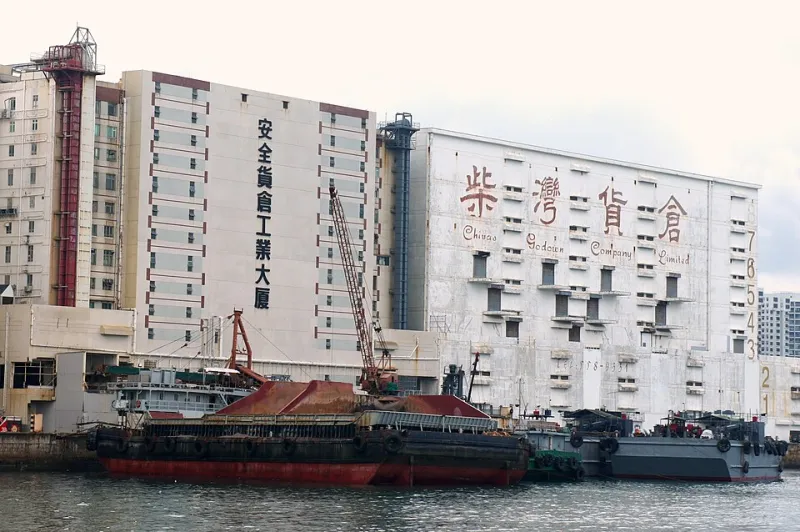
Photo: Mk2010, CC BY-SA 3.0, via Wikimedia Commons
The nearshoring argument was compelling on paper. Move your first-mile operations closer to the UK market, reduce lead times, cut your exposure to trans-continental freight volatility, and simplify your customs position post-Brexit. For a cohort of UK direct-to-consumer brands between 2021 and 2023, that logic prompted a wave of transitions to European fulfilment partners—typically in Poland, the Netherlands, or Germany.
Several of those same brands are now routing back through Hong Kong. Not all of them, and not without nuance. But the reversal is consistent enough, and the reasoning coherent enough, to merit a serious examination of what the nearshoring model got wrong—and what Hong Kong continues to get right.
The Promise That Didn't Fully Deliver
Nearshoring to Europe addressed a genuine problem. Post-Brexit customs friction had added time and administrative complexity to UK imports, and the disruption to trans-Pacific and trans-continental freight during 2020 and 2021 had exposed the fragility of long supply chains. Moving closer to the consumer market seemed rational.
The difficulty was that nearshoring solved a transit problem while creating a manufacturing problem. European contract manufacturers—even those operating in lower-cost Eastern European markets—carry significantly higher minimum order quantities than their counterparts in Hong Kong or the Pearl River Delta. For D2C brands whose business model depends on frequent SKU iteration, limited-edition releases, and rapid response to consumer feedback, those minimums represent a material constraint.
A UK skincare brand that might test a new formulation in a 500-unit run through a Hong Kong contract manufacturer would face a minimum of 3,000 to 5,000 units from a comparable European facility—assuming a suitable facility could be identified at all. The capital tied up in that inventory, combined with the storage costs at a European 3PL, can quickly eliminate the margin gains that nearshoring was supposed to deliver.
What Hong Kong Offers That Europe Cannot Easily Replicate
Hong Kong's value for D2C brands is not simply about unit economics, though the numbers matter. It is about the structural characteristics of the manufacturing and logistics ecosystem that surrounds the territory.
The concentration of specialised contract manufacturers within a relatively compact geography—spanning Hong Kong itself and the adjacent Pearl River Delta—means that a UK brand can access expertise in cosmetics, electronics accessories, apparel, homeware, and food supplements within a single sourcing relationship. Lead times from sample approval to finished goods, for a micro-batch run, can be measured in days rather than weeks.
That speed has direct cash flow implications. A brand that can move from concept to live product in four to six weeks, test consumer response, and then scale or discontinue based on real data is operating a fundamentally different financial model from one that commits to a 5,000-unit minimum and waits twelve weeks for delivery. The former model preserves working capital and reduces the risk of dead stock; the latter concentrates risk in exactly the scenarios—new product launches, seasonal items, trend-responsive SKUs—where uncertainty is highest.
Metrics That Matter: Time-to-Market and Inventory Velocity
The brands that have made the return to Hong Kong-anchored first-mile operations most successfully are those that have quantified the decision in terms of time-to-market and inventory velocity rather than simply freight cost per unit.
One UK homeware brand, having spent eighteen months routing new product introductions through a Dutch 3PL supplied by a Polish manufacturer, undertook a structured comparison when renewing its logistics contract. The analysis revealed that the average time from purchase order to UK consumer availability was 14.3 weeks via the European route. The equivalent figure for a comparable product category sourced through a Hong Kong manufacturer and air-freighted to a UK fulfilment centre was 6.8 weeks.
The freight cost differential was real—air freight from Hong Kong carries a premium over road freight from Poland—but when set against the reduction in inventory holding costs, the improvement in cash conversion cycle, and the elimination of two markdown events caused by delayed seasonal stock, the Hong Kong route demonstrated a superior total cost of ownership across the comparison period.
A second case, from the UK supplements sector, illustrated a different dimension of the same principle. The brand in question had been experiencing a consistent pattern of overstock on slow-moving variants and stockouts on bestsellers—a classic symptom of long replenishment cycles. By shifting to smaller, more frequent orders from a Hong Kong manufacturer with a three-week lead time, the business reduced its average inventory holding by 34% while simultaneously improving in-stock rates on its top ten SKUs.
The Compliance Consideration
It would be misleading to present the Hong Kong first-mile model as frictionless. UK import compliance for D2C goods—particularly in categories such as cosmetics, supplements, and electronics—requires careful management of product registration, labelling requirements, and, where applicable, UKCA or FSA compliance documentation.
Brands that have encountered difficulty with this model have typically done so because they treated compliance as a logistics afterthought rather than a supply chain design input. Working with a Hong Kong-based partner that maintains active knowledge of UK import requirements, and that can manage documentation and labelling at origin rather than at the UK border, removes the friction that has caused problems for less well-prepared operators.
A Strategic Recalibration, Not a Retreat
The brands returning to Hong Kong are not abandoning the lessons of the nearshoring experiment. Many are operating hybrid models: European fulfilment for their established, high-volume core range, and Hong Kong first-mile for new product development and micro-batch inventory. That configuration captures the benefits of both approaches while limiting the weaknesses of each.
What the trend reflects, at a broader level, is a more sophisticated understanding of what supply chain proximity actually means for a D2C business. Proximity to the consumer matters at the fulfilment stage. Proximity to manufacturing capability, flexibility, and speed matters at the product development and first-mile stage. Hong Kong, for the latter, remains difficult to replace.