Timing the Tide: A UK Retailer's Guide to Navigating Hong Kong's Peak Logistics Windows
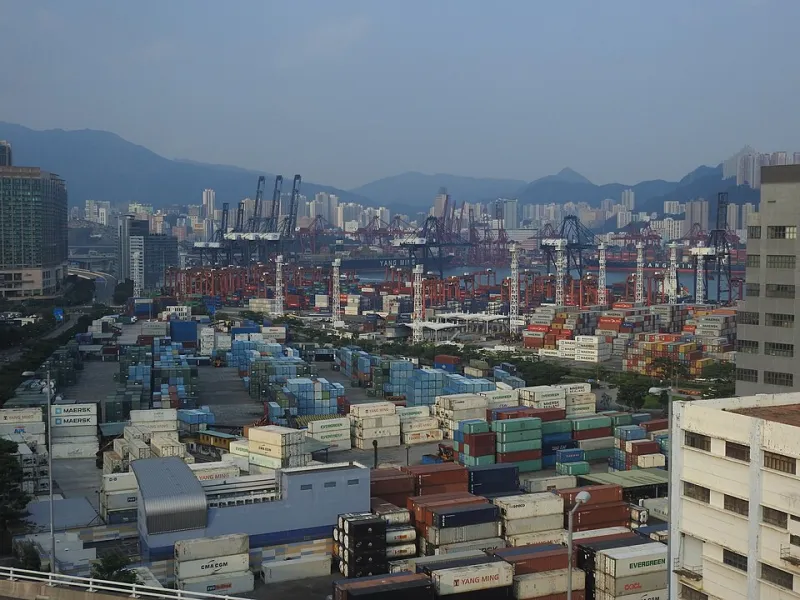
Photo: Rehman Abubakr, CC BY-SA 4.0, via Wikimedia Commons
Every experienced UK importer who works with Hong Kong knows the feeling. It is late January, the factory has confirmed despatch, the freight forwarder has the booking reference, and then—almost without warning—the rhythm of the supply chain shifts. Vessel space tightens. Warehouse slots disappear. Haulage rates between the supplier's facility and the Hong Kong terminal climb sharply. And the goods that were supposed to arrive at a British distribution centre in early March are now looking at an April delivery, with no clear explanation beyond the phrase that every importer in this position has heard: Chinese New Year.
The seasonal constraints of Hong Kong's logistics calendar are not a secret. They are, in fact, among the most predictable features of the Asia-to-UK supply chain. Yet year after year, a significant proportion of UK retailers absorb avoidable costs and delays because their planning cycles do not adequately account for the capacity rhythms of the world's busiest trading hub. This guide is intended to change that.
Understanding the Three Critical Windows
Hong Kong's logistics calendar is shaped by three distinct peak periods, each with its own character, duration, and set of implications for UK importers.
Chinese New Year is the most widely discussed and, in some respects, the most misunderstood. The public holiday itself typically falls between late January and mid-February and lasts for approximately a week. But the disruption to supply chains extends considerably further in both directions. Manufacturing facilities across southern China—many of which supply goods that transit Hong Kong—begin winding down production two to three weeks before the holiday as workers return to their home provinces. Warehouse operations in Hong Kong reduce to skeleton staffing. Container terminal throughput drops noticeably. And in the weeks immediately following the holiday, there is a pronounced surge in freight volumes as manufacturers and exporters attempt to clear the backlog that has accumulated during the shutdown period.
For UK retailers, the practical implication is that any goods intended for a February or March arrival in Britain need to have left Hong Kong by early to mid-January at the latest. Orders that are placed in December with an expectation of a February shipment are, in most years, unrealistic.
The pre-Christmas container surge is the second major bottleneck, and it operates on a longer timeline than many UK buyers appreciate. The demand for container space on Asia-to-Europe routes peaks between August and October, driven by the global retail industry's effort to position inventory ahead of the fourth-quarter selling season. During this window, freight rates on Hong Kong-to-UK routes can increase substantially—in recent years, the differential between off-peak and peak rates has been significant enough to materially affect landed cost calculations. Warehouse space in Hong Kong becomes scarce, and the lead times for consolidation and container stuffing extend.
UK retailers who leave their peak-season sourcing decisions until June or July are, in effect, competing for capacity against every other major importer in the world. The result is predictable: higher rates, longer lead times, and a narrower margin for error if any element of the supply chain encounters a delay.
Golden Week in October—China's National Day holiday—creates a shorter but still meaningful disruption. Manufacturing output across the border slows for approximately a week, and the knock-on effect on Hong Kong's freight volumes is noticeable, particularly for goods that involve any processing or finishing on the Chinese mainland before export. For UK importers with tight replenishment cycles, a Golden Week delay can be enough to create a stock gap during a critical trading period.
Forecasting Demand Around the Calendar
The foundation of effective seasonal planning is demand forecasting that is explicitly calibrated to the Hong Kong logistics calendar, rather than simply to UK retail trading patterns.
This means working backwards from the required UK arrival date—not the required shelf date—and mapping each stage of the supply chain against the known capacity constraints of the relevant window. A UK retailer who needs goods on shelf by the 1st of December needs to identify the latest acceptable arrival date at their UK distribution centre, then calculate the transit time from Hong Kong (typically twenty to thirty days for standard ocean freight, depending on routing), then add the pre-shipment processing time at the Hong Kong warehouse, then account for the supplier's production lead time. In a peak season, each of these stages takes longer than it would in an off-peak period, and the planning model needs to reflect that.
UK businesses that operate with a twelve-week forward planning horizon for their Hong Kong-sourced products are generally better positioned than those working on an eight-week cycle. During peak windows, twelve weeks is often the minimum that allows for meaningful contingency.
Pre-Positioning Inventory: The Case for Earlier Commitment
One of the most effective tools available to UK retailers is the deliberate use of Hong Kong's warehousing infrastructure to pre-position inventory ahead of peak demand periods. Rather than timing shipments to arrive in the UK as close as possible to the point of need, businesses that maintain buffer stock in Hong Kong bonded or public warehouses can insulate themselves from the worst effects of seasonal capacity constraints.
This approach involves a degree of capital commitment that not every business will find comfortable. Holding inventory in Hong Kong means tying up working capital in goods that have not yet been sold, and it requires confidence in the demand forecast. But for high-velocity lines where a stock-out during a peak trading period would be genuinely costly, the economics of pre-positioning are often favourable compared to the cost of expedited air freight—which is the alternative that businesses typically resort to when ocean freight capacity is unavailable.
The key is to make the pre-positioning decision early enough to take advantage of off-peak warehousing rates. Hong Kong's public warehousing market is significantly more competitive outside the August-to-October window, and businesses that negotiate storage agreements in the first or second quarter of the calendar year will typically secure better terms than those approaching the market in July.
Negotiating Favourable Terms in the Off-Peak Window
The off-peak period—broadly speaking, November through to late January, and again from March through to June—represents the most favourable environment for UK importers to negotiate logistics and warehousing agreements. Freight forwarders and warehouse operators are more receptive to volume commitments, longer contract terms, and rate concessions during periods when demand is lower.
UK businesses that approach their Hong Kong logistics partners with a clear annual volume forecast and a willingness to commit to a defined minimum throughput are well placed to secure preferential rates that apply across the full year, including the peak windows when they matter most. This requires a degree of planning discipline that not every business currently exercises, but the commercial case for doing so is straightforward.
It is also worth engaging directly with shipping lines during the off-peak period to secure forward bookings for the August-to-October peak season. Guaranteed space allocations, negotiated in advance, provide a degree of insulation against the rate spikes that characterise the peak window and give the supply chain team a reliable foundation on which to build their seasonal planning.
Resilience Is a Calendar Exercise
The businesses that manage Hong Kong's seasonal constraints most effectively are not necessarily those with the largest budgets or the most sophisticated logistics technology. They are, more often, the ones that treat the logistics calendar as a strategic planning document and make their sourcing, inventory, and negotiating decisions accordingly.
The bottlenecks are predictable. The capacity constraints are well understood. The rate cycles follow recognisable patterns. What remains variable is whether a UK retailer chooses to plan around these realities or to absorb the cost of ignoring them. For businesses that source meaningfully from Hong Kong, the case for the former is difficult to dispute.

